YanNew | Global News, Science & Public Awareness
July 11, 2026
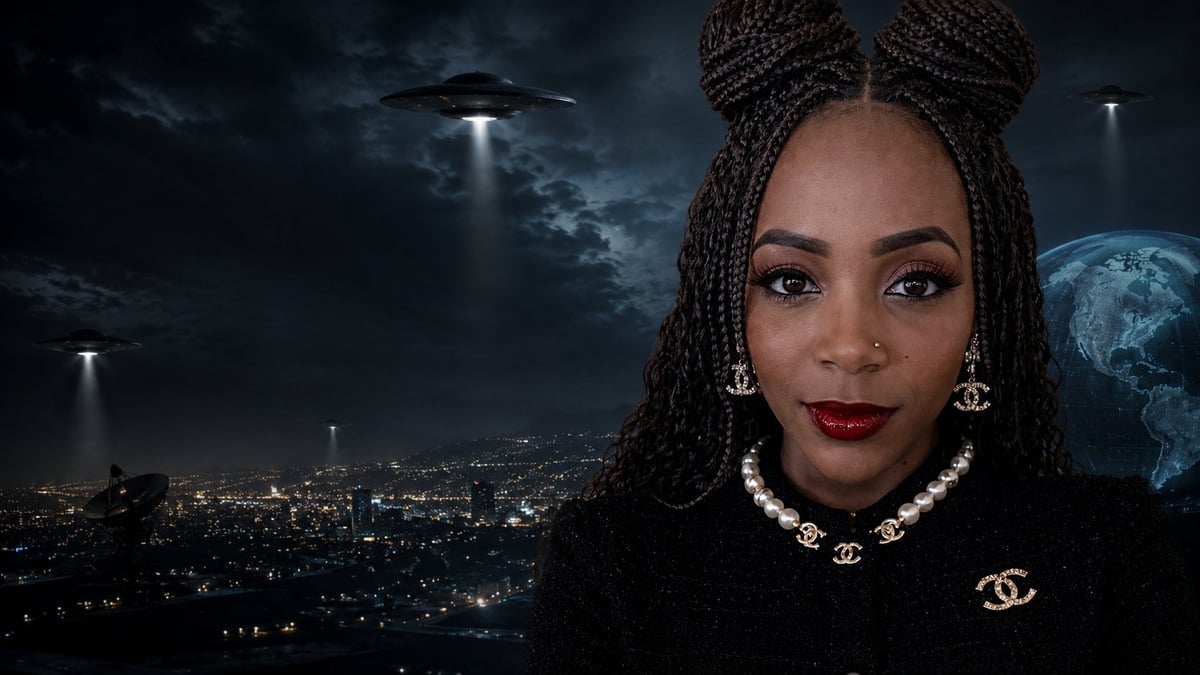
For decades, people who reported UFO sightings were often dismissed, mocked, or labeled as conspiracy theorists. Today, that conversation has changed.
Unidentified flying objects, now officially referred to by many government agencies as Unidentified Anomalous Phenomena, or UAP, are no longer just stories from science fiction movies or late-night internet forums. They are being discussed by governments, military officials, scientists, pilots, and lawmakers around the world.
The important question is no longer whether people are seeing unusual objects in the sky.
They are.
The real question is what these objects are, where they come from, and why so many remain unexplained.
UFO does not automatically mean alien spacecraft. It means an object or phenomenon has been observed and has not yet been identified.
That distinction matters.
A sighting can be real without immediately proving extraterrestrial life. A pilot may see an object. A sensor may detect movement. A video may capture something unusual. Investigators may review the evidence and still be unable to determine exactly what it was.
That is why the term UAP has become more common. It gives officials and researchers a more serious way to study events that do not have an immediate explanation.
The reality is clear: governments are now acknowledging that some sightings are legitimate events that require investigation.
For many years, UFO reports were treated as fringe claims. But recent military reports, congressional interest, official investigations, and public pressure have pushed the subject into the mainstream.
Pilots have described encounters with objects moving in ways they could not easily explain. Military footage has shown unusual aerial activity. Government offices have reviewed cases involving radar data, infrared sensors, video evidence, and eyewitness accounts.
This does not mean every UFO sighting is extraordinary. Many cases are later identified as balloons, drones, aircraft, birds, satellites, weather events, or sensor errors.
But some cases remain unresolved.
That is what makes the issue important.
The word "alien" immediately captures public attention. It raises questions about life beyond Earth, advanced civilizations, and whether humanity is alone in the universe.
Scientists have long considered the possibility of life beyond Earth. The universe contains billions of galaxies, each filled with billions of stars and planets. From a scientific standpoint, the possibility that life exists somewhere else is taken seriously.
However, there is a difference between saying extraterrestrial life may exist and saying aliens have been proven to visit Earth.
At this time, public official evidence has not confirmed that UFOs or UAPs are alien spacecraft. Government agencies have acknowledged unexplained sightings, but unexplained does not automatically mean extraterrestrial.
Still, the lack of a final explanation keeps the public interested and keeps the question open.
UFO and UAP sightings are not just an American topic. Reports and investigations have appeared across different countries, cultures, and time periods.
This makes the issue global.
If unidentified objects are appearing in restricted airspace, near military operations, or around sensitive infrastructure, governments have a responsibility to investigate. Even if these objects are not alien, they could represent drones, surveillance technology, foreign aerospace systems, experimental aircraft, or unknown natural phenomena.
That means UAPs are not only a mystery story.
They are also a national security issue, a science issue, and a public transparency issue.
One reason UFO stories continue to grow is because people feel that governments have not been fully transparent. For years, many witnesses believed their experiences were ignored or covered up.
Now, with more official reports, hearings, and document releases, the public is demanding clearer answers.
People want to know:
These questions are not unreasonable. In fact, they are exactly the kinds of questions a modern society should ask when unexplained events are being recorded by credible witnesses and advanced technology.
The future of UFO research will depend on better evidence.
That means clearer images, stronger sensor data, transparent reporting systems, scientific review, and public access to credible information.
The conversation should not be driven only by fear or speculation. It should be driven by evidence, investigation, and open inquiry.
What makes this moment historic is that the subject is no longer being completely pushed aside. Governments and scientists are being forced to take it seriously.
Not every viral UFO video is real. Not every light in the sky is alien. Not every government file proves a secret invasion.
But the larger truth remains powerful:
People are seeing things. Some sightings are documented. Some objects remain unidentified. And the world is finally being forced to ask serious questions about what may be happening above us.
UFO sightings are real.
The mystery is real.
The search for answers is real.
Whether the final answer is advanced technology, unknown atmospheric activity, foreign surveillance, or something beyond current human understanding, the issue deserves serious attention.
For YanNew, this is not about spreading fear.
It is about asking the question the world can no longer ignore:
"If unidentified objects are being seen, recorded, and investigated across the globe, what are they — and who is ready to tell the truth?"
YanNew covers global news, public awareness, culture, technology, science, and stories shaping the way people understand the world.